
Who Owns the Cut?
The Legal History of Britain's Canals and What It Means for Life on the Water
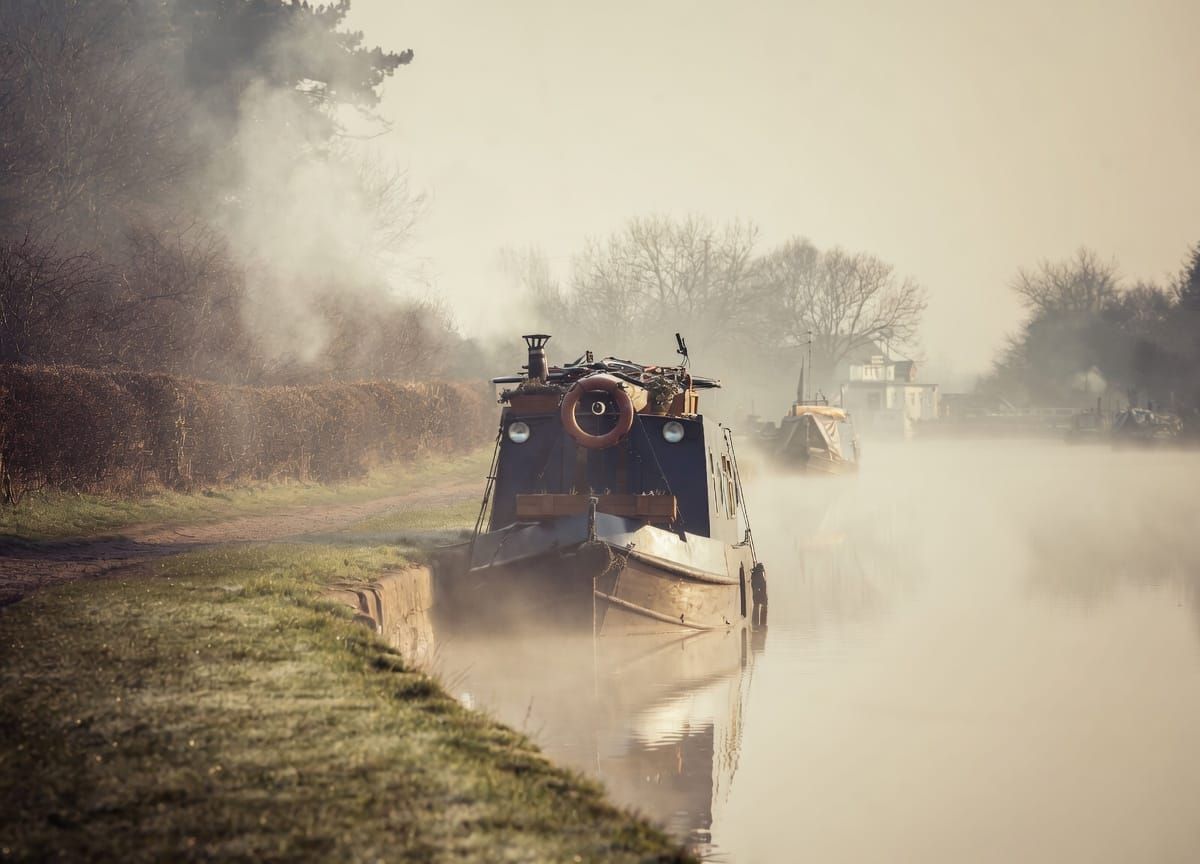
My family has always moved. My childhood was spent between narrowboats, vans, and caravans as we travelled the festival circuit. Of all those places, the boat always felt most like home. Canal heritage runs through my family across multiple generations. My father is retiring onto a narrowboat full-time. My grandparents did the same before him.
I grew up absorbing a culture that has existed on the cut for as long as the cut has existed. I am now an AI law specialist. My partner Jade, our two sons, and I are transitioning to full-time motorhome life, a move that feels less like a departure and more like an inevitability.
What I want to do in this piece is trace the legal history of Britain's canal network and connect it to the present-day reality for the people who live and travel on it. Because that history is not neutral. It explains why the legal position of liveaboards today is as precarious as it is. And it raises questions that nobody in Parliament has yet been willing to answer properly.
Canal Mania and the Age of Private Acts
The legal story of Britain's canals begins not with a single piece of legislation but with hundreds of them.
From roughly the 1750s through to the 1840s, each new canal required its own private Act of Parliament. The promoters of a proposed navigation, typically merchants, landowners, and industrialists, would petition Parliament, demonstrate public benefit, and if successful receive a bespoke statute authorising construction, setting powers of compulsory purchase, fixing maximum toll rates, and constituting a canal company as a legal entity.There was no general framework governing navigations, no unified regulator, and no national standard. By the height of Canal Mania in the 1790s, Parliament was passing canal Acts at a rate that would not look out of place in a modern legislative programme.
Each Act was a private property arrangement dressed in public law clothing. The canal company held the navigation in trust for its shareholders and could take land compulsorily, but had no obligation to the public beyond what its specific statute required. Towpaths existed because working boats needed horses to haul them. Public access was largely incidental.
This fragmented, privately legislated structure created the legal DNA that still shapes disputes today: competing authorities, inconsistent rights, and a waterway network that was never quite public and never quite private.
Who the Law Was Built For
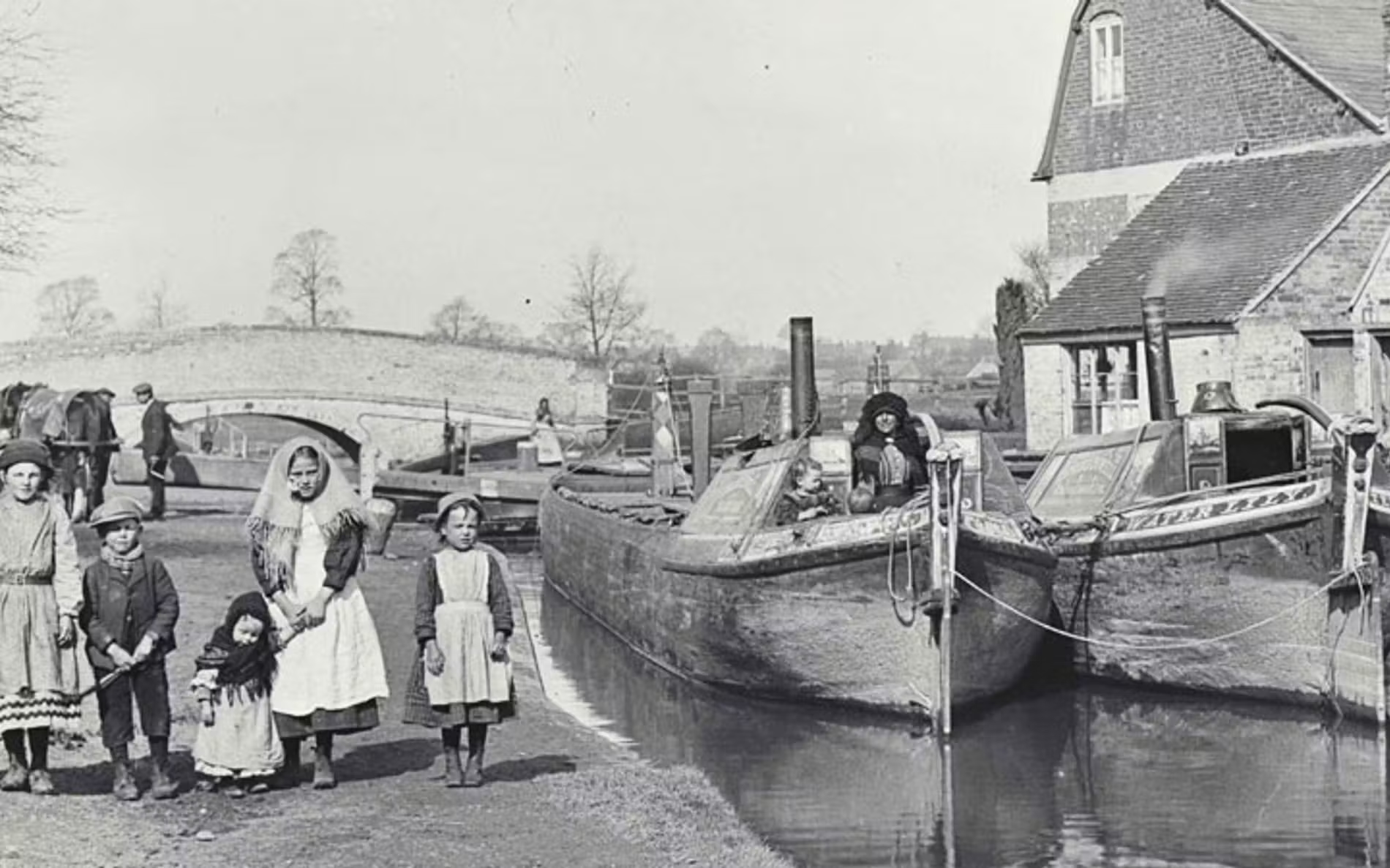
My family's connection to the canals spans several generations. Across that time, the waterways were never really leisure. They were home and livelihood, one part of a broader nomadic pattern that included vans, caravans, festival grounds, and roads as much as water.
The people who worked these navigations had no meaningful input into the Acts of Parliament that governed them. Canal companies were constituted to serve their shareholders. The boating families who hauled coal and pottery and grain were labour and nothing more in legal terms: no tenure, no rights of residence, no recourse when a company changed its tolls, closed a cut, or ceased to operate. The law was not designed with them in mind. It was designed for the people who owned the infrastructure and profited from the cargo.
I think about that when people ask me whether liveaboards have rights. My family never fitted neatly into any single category: boat people, festival travellers, van dwellers. The law had no framework for any of it. The honest answer, across most of the history of these waterways, has been: not really. The question is whether that has changed.
Collapse, Acquisition, and Legal Limbo: The Railway Era
The arrival of the railways from the 1840s did not just damage canal trade. It created legal chaos. Railway companies bought up canal companies, sometimes to operate them, often to neutralise competition. Others went bankrupt, leaving navigations in legal limbo with unclear ownership and no obligation on anyone to maintain them.
The result by the early twentieth century was a patchwork of hundreds of navigation authorities, private companies, and derelict cuts in various states of legal undeath. Parliament made incremental attempts at rationalisation but there was no systematic overhaul. The waterways entered the Second World War in broadly the same legal condition they had been in during the 1880s.
For families living and working on the water, this period of fossilisation was not abstract. A navigation authority in terminal financial decline had no incentive to maintain infrastructure or consider the welfare of the people whose homes floated on its water. The law offered those people nothing.

From Private Profit to Public Asset: TheTransport Act 1947
The Transport Act 1947 was the pivotal moment. The post-war Labour government's nationalisation programme swept in not just the railways and road haulage but the canals. The British Transport Commission (BTC) was created as a single public body to hold and operate the full range of inland transport infrastructure.
For the waterways, this meant the forced acquisition of the remaining private canal companies and their consolidation under a single statutory authority for the first time in history.
In practice, the BTC inherited the full mess: hundreds of disparate navigations, inconsistent statutory powers, and a business model that had not been commercially viable for a century. Nationalisation gave the waterways a single legal identity but did nothing to resolve the underlying economic problem.
The more significant shift was conceptual. Under the private Acts regime, a canal existed to generate returns for its proprietors. Under the BTC, it existed as public infrastructure, a fundamentally different legal and political framing. For working boating families, it meant they were now nominally within the scope of a public body with some accountability to Parliament. It was not security. But it was a change in the character of the relationship.
Creating the British Waterways Board: TheTransport Act 1962
The BTC was unwieldy and the nationalisation model was already being revisited by the early 1960s. The Transport Act 1962 broke the BTC into separate functional bodies. The waterways transferred to the newly created British Waterways Board (BWB), a statutory corporation with specific responsibilities for managing the nationalised network.
The 1962 Act remains important because it is the source of many enforcement and management powers that the Canal and River Trust exercises today. When CRT was created in 2012, it inherited a large body of functions tracing directly back to BWB's statutory foundation.
The BWB era also saw the network shift gradually from industrial transport towards amenity and leisure. The law did not keep pace with that transition. BWB's powers were designed around managing a navigation, not the welfare or rights of people living aboard vessels on it.
The Licensing Framework: TheBritish Waterways Act 1995
The British Waterways Act 1995 is the most practically significant piece of waterways legislation for anyone who lives or travels on the network today.
Section 17 establishes the boat licensing regime. A vessel must be licensed to use the managed waterways. Licensing under section 17 requires the vessel to have either a home mooring or to be used bona fide for navigation throughout the licence period, without remaining continuously in any one place for more than 14 days or such longer period as the navigation authority permits.
This is the statutory basis for the continuous cruising requirement. It is not a CRT policy invention. It flows from an Act of Parliament. Boats without a home mooring that fail to move genuinely and progressively along the network are in breach of their licence on a statutory footing.
The 1995 Act also gave BWB, and now CRT, meaningful enforcement powers: the ability to detain, remove, and ultimately dispose of unlicensed or non-compliant vessels. These are serious powers. Understanding that they derive from primary legislation matters when assessing how much discretion the navigation authority has in exercising them.
My father is about to live within this framework full-time. My grandparents did the same on the last boat I knew as a child. The statute has changed around them. The practical constraints have not shifted nearly as much as the legislative history might suggest.
A Charity With a Coercive Hand:
The Public Bodies Act 2011 and the CRT Transfer
The most structurally significant change to the waterways in fifty years came from the coalition government's programme of public body reform, not from any waterways-specific statute.
The Public Bodies Act 2011 gave ministers wide powers to abolish, merge, or transfer the functions of listed public bodies. British Waterways was listed. The mechanism was the British Waterways (Transfer of Functions) Order 2012(SI 2012/1659), which transferred the functions, assets, liabilities, and staff of British Waterways Board to the Canal and River Trust, a charitable company limited by guarantee, with effect from 2 July 2012.
CRT is registered as a charity under the Charities Act 2011, with objects expressed in terms of the wellbeing of the waterways and the communities that use them. It receives significant government grant funding under a 15-year funding agreement but is not a government body and is not subject to the same public law accountability mechanisms that applied to BWB.
This is a genuinely unusual legal arrangement. CRT is a private charity. But it exercises statutory enforcement powers inherited from a public corporation, manages a network of public navigable waterways, and holds those assets effectively in perpetuity under charitable trust principles. The government funding adds a further complicating layer: CRT is neither fully independent nor straightforwardly accountable. The hybrid nature of this structure creates real tensions and real legal uncertainties for people on the water.
Practical Rights on the Network Today
Towpath Access: Permission, Not Right
The most widespread misconception about the canal network is that towpaths are public rights of way. Most of them are not.
CRT owns the towpath land. Public access is, in the majority of cases, permissive, granted by CRT as a matter of policy rather than compelled by law. Some towpaths do carry established public rights of way, either through formal dedication or long-established use, and those rights are enforceable regardless of CRT's wishes. But they are the exception, not the rule, and there is no reliable way for a member of the public to know which category a given stretch falls into without checking the definitive statement for the relevant local highway authority.
The Countryside and Rights of Way Act 2000 created the right to roam over mapped open access land but does not extend to towpaths. Anyone told otherwise is mistaken. CRT's Towpath Code sets out the terms of the permissive access it grants. That permission can be varied or withdrawn.
I spent enough time on towpaths as a child to think of them as simply there, part of the landscape and accessible to anyone. The idea that access is a courtesy rather than a right still strikes me as wrong, even understanding why it is legally the case.
Mooring: A Privilege, Not a Right
There is no common law right to moor a vessel on the inland waterways. Mooring is a privilege governed by licence terms and, where applicable, by separate mooring agreements with CRT or private operators.
For continuous cruisers, the 14-day rule operates as the baseline. CRT designates some areas with shorter permitted stays. The enforcement gap between policy and practice is significant, until it is not, at which point the statutory powers are fully available and the boater has limited recourse.
Residential moorings occupy a distinct legal category. A mooring used as a primary residence involves a material change of use of land under planning law and requires planning permission from the relevant local planning authority. CRT's consent does not substitute for planning permission. This catches a significant number of liveaboards by surprise.
Liveaboard Status: The Legal Gap
Here is where the picture becomes genuinely thin, and where it connects most directly to the family history running through this piece.
There is no statutory definition of a liveaboard. UK waterways law does not recognise living aboard a vessel on the inland waterways as a distinct legal status generating specific rights or obligations. The licensing regime under the 1995 Act treats a liveaboard vessel identically to a leisure boat. The distinction that matters legally is not whether you live aboard, but whether you have a home mooring.
A liveaboard with a residential mooring and the relevant planning permission has a legally settled position. A liveaboard continuous cruiser does not:
- No security of tenure in any recognised form
- Wide CRT enforcement discretion under section 17
- No statutory protection against removal equivalent to that available to residential tenants or occupiers on land
- If CRT exercises its power to remove a vessel, the liveaboard's position is that of a person whose home is being removed, but English law does not currently treat it as such in any robust way
There is ongoing advocacy for a specific legal framework for liveaboards, and some county court decisions have explored the limits of CRT's enforcement powers in individual cases. The absence of primary legislation leaves continuous cruiser liveaboards significantly more exposed than anyone with a conventional residential tenure on land.
The Accountability Problem
As a registered charity, CRT's primary legal obligation is to its charitable objects. Its trustees have duties under charity law to act in furtherance of those objects and in the best interests of the charity.
At the same time, CRT holds statutory enforcement powers that are coercive in nature. These powers were designed for a public corporation within a public law framework, with the accountability mechanisms that implies. CRT operates them as a private charity. And while it receives substantial government grant funding, which might suggest a public interest obligation, that funding relationship does not recreate the accountability structures that existed under the BWB model.
Boaters aggrieved by CRT's enforcement decisions have limited recourse. Judicial review of a charity's decisions is available in principle but is rarely straightforward. The Charity Commission deals with governance failures, not individual enforcement decisions. CRT's own complaints process is not independent.
The result is a navigation authority that wields significant coercive power while sitting outside the conventional frameworks of public law, regulatory law, and landlord and tenant law that would normally provide check and balance.
230 Years and Nothing Has Changed
My father is retiring onto the water. My sons are about to grow up in a motorhome. Between those two facts sits most of what I have written here.
The people who live outside conventional housing tenure, on the water, on the road, in vehicles, have always occupied a persistent grey zone in English law. No security of tenure. No formal recognition. Enforcement frameworks designed around the assumption that home is a fixed address on land, and that anyone who does not have one is a problem to be managed rather than a person to be protected.
My family has moved between boats, vans, caravans, and festival grounds across several generations. None of those modes of living have ever sat comfortably within a legal framework designed for people who stay put. That is not an accident. It is a structural choice embedded in legislation that has never been seriously revisited.
Britain's canal network began as a collection of private property arrangements, became public infrastructure through nationalisation, and has now settled into a hybrid form that is neither fully public nor fully private. Each of those transitions left legal sediment: inherited powers, ambiguous rights, and gaps in protection that matter enormously to the people who live and travel on the water.
The working boatmen and women of the Canal Mania era had no input into the Acts that governed their lives. The liveaboards and continuous cruisers of the CRT era are not in a fundamentally different position. The Acts changed. The underlying dynamic, tolerated, managed, and largely unprotected, did not.
The law still treats life on the cut as a problem to be managed rather than a legitimate form of home. Until Parliament creates a proper statutory framework for liveaboards, one that recognises security of tenure on water the way it does on land, the underlying dynamic remains unchanged after 230 years. That is not sentiment. It is a provable legal fact, and it is long overdue a remedy.
Jason Dillon LLB LLM is an AI law specialist and the writer behind Professor Nomad, a publication covering law, technology, and life on the road. Nothing in this article constitutes legal advice. If you are involved in a dispute with a navigation authority, seek advice from a qualified solicitor.
Further reading: Primary legislation referenced in this article is available at legislation.gov.uk. CRT's licensing conditions and mooring guidance are published at canalrivertrust.org.uk. The Inland Waterways Association maintains briefings on liveaboard and navigation rights at waterways.org.uk.